

Temperature Measurement with Resistance Thermometers
Resistance temperature sensors such as Pt100 and Pt1000 are among the most widely used sensors in industrial measurement technology. They are particularly well-suited for applications where temperature values need to be measured with precision, stability, and reproducibility. The quality of the measurement depends not only on the sensor itself, but also on the connection type, the design of the measurement input, and the correct linearization of the sensor’s characteristic curve.
What is a Resistance Temperature Detector?
A resistance temperature detector is a temperature sensor whose electrical resistance changes with temperature. The temperature is not measured directly but is determined from the resistance value of the sensor element.
Platinum resistance temperature detectors are predominantly used in industrial applications. Platinum is well-suited for this purpose because the material:
- is chemically stable
- has a reproducible characteristic curve
- can be used over a wide temperature range
- provides high long-term stability
The most common sensor types are:
- Pt100 with 100 ohms at 0 °C
- Pt1000 with 1000 ohms at 0 °C
Both sensor types are well established in industrial practice. In addition, there are also the Pt200 (200 ohms at 0 °C) and Pt500 (500 ohms at 0 °C). MicroControl supports the P1100, Pt200, Pt500, and Pt1000 types with the µCAN.4.ti-BOX; the µCAN.8.ti-SNAP supports Pt100 and Pt1000.
Measuring Principle of Resistance Temperature Detectors
To measure temperature, a defined current is passed through the sensor. The resistance can be calculated from the resulting voltage drop. This resistance value is then converted into a temperature value.
A typical measurement chain consists of:
1. Resistance temperature detector, such as Pt100 or Pt1000
2. Connection cable
3. Measurement input or transducer
4. Controller, display, or data acquisition system
The quality of the measurement result depends not only on the sensor itself, but also on the connection type, the evaluation method, and the overall signal processing.
Pt100 and Pt1000
Pt100
A Pt100 has a resistance of 100 ohms at 0 °C.
Typical features:
– widely used in industrial applications
– high accuracy
– established standard in many measurement systems
Pt1000
A Pt1000 has a resistance of 1000 ohms at 0 °C.
Typical features:
– higher wanted signal compared to Pt100
– lower relative influence of the wire impedance
– advantageous in many electronic evaluation circuits
2-Wire or 4-Wire
2-Wire-Circuit
In a 2-wire circuit, the sensor is connected via two wires. The resistance of the connecting wires is directly included in the measurement.
Advantages:
– simple setup
– low wiring effort
– cost-effective solution for standard applications
Limitations:
– wire resistance destors the measurement result
– particularly relevant for long wires and small changes in resistance
The 2-wire circuit is therefore particularly suitable for applications where simple connection is a priority, and the accuracy requirements are appropriately adjusted.
4-Wire Circuit
The 4-wire circuit is the technically sound solution for precise resistance measurements. In this configuration, the current supply and voltage measurement are routed separately. This virtually eliminates the influence of the resistance of the wire on the measurement result.
Advantages:
– high measurement accuracy
– precise and reproducible resistance measurement
– suitable for demanding measurement tasks
Typical applications:
– precision measurements
– laboratory and test engineering
– industrial application with high requirements for accuracy and stability
From a technical point of view, a clear distinction often makes sense: 2-wire for simple applications, 4-wire for precision.
Why we can do without a 3-wire System
The 3-wire circuit is used in many industrial applications as a compromise between cost and accuracy. However, it requires the wire resistances to be sufficiently similar to provide a reliable compensation.
Depending on the application, it makes more sense to deliberately avoid this compromise and clearly define the measurement setup:
– 2-wirer, when a simple and cost-effective solution is sufficient
– 4-Leiter, when precise measurement results are required
This ensures that the design of the measurement chain remains unambiguous and technically transparent.
Sensor Characteristic Curve
An important consideration in temperature measurement using resistance thermometers is the sensor’s characteristic curve. Although the resistance of a Pt sensor changes almost proportional to the temperature in a wide range of applications, the relationship is not linear.
This means that the temperature value cannot be determined with sufficient accuracy across the entire measurement range using a simple linear conversion factor. For precise measurement results, the actual characteristic curve of the sensor must be considered.
This relationship is particularly crucial when higher accuracy requirements or wider temperature ranges are involved.
Linearization Using Software and Lookup Tables
For this purpose, the following resources are typically used:
– stored characteristic curves
– mathematical approximations
– lookup tables with interpolation
Lookup tables are a proven method in practice. In this approach, defined resistance values are assigned to the corresponding temperature values. Intermediate values are interpolated mathematically.
This method offers several advantages:
– high accuracy
– reproducible behaviour
– low computational effort
– simple implementation in firmware or software
The resistance sensor alone does not provide a directly usable temperature value. Only by correct linearization in the evaluation electronics or software a reliable measurement result is obtained.
Measurment Current and Self-Heating
To measure a resistance, a defined current must flow through the sensor element. This current is often referred to as the measurement current or excitation current.
When designing precise measurement inputs, the magnitude of this current is of particular importance. If the measurement current is too high, electrical power will be lost within the sensor. This leads to self-heating of the measurement resistor.
Consequently, the sensor heats up during the measurement process and the measurement no longer captures only the actual process temperature, but also the temperature-increasing effect of the measurement current.
Self-heating is particularly relevant in the following cases:
– small sensor elements
– poor heat dissipation
– stationary media
– high-precision measurements
For these reasons, for precise 4-wire measurements, the following applies:
– the measurement current must be sufficiently high to produce a stable measurement signal.
– at the same time, it must remain low enough to minimize the sensor’s self-heating process.
The design of the measurement input is thus always a technical compromise between signal quality and minimal sensor load.
Measurement technology solutions from MicroControl
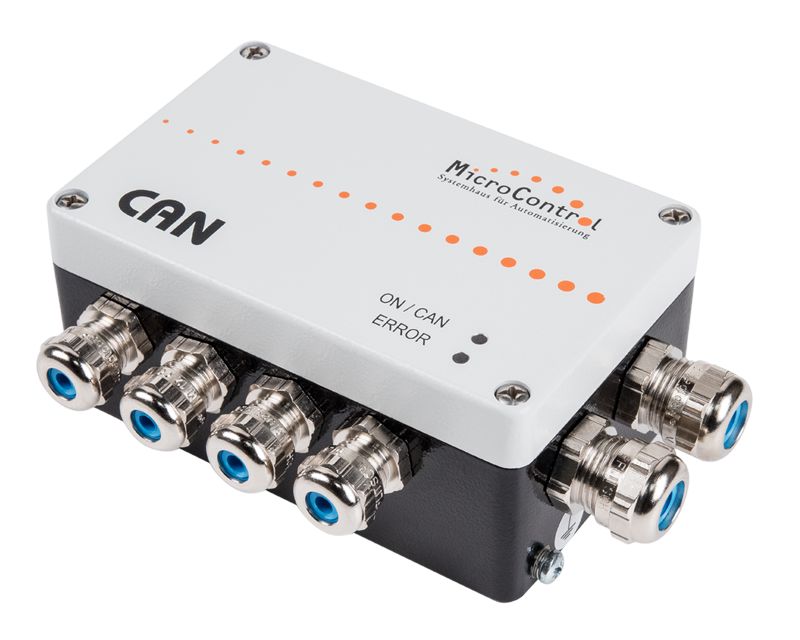
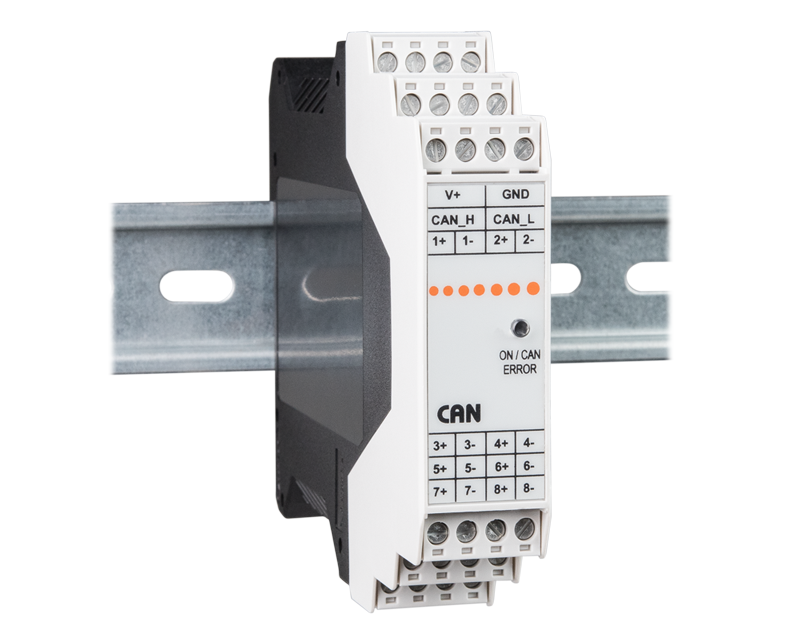
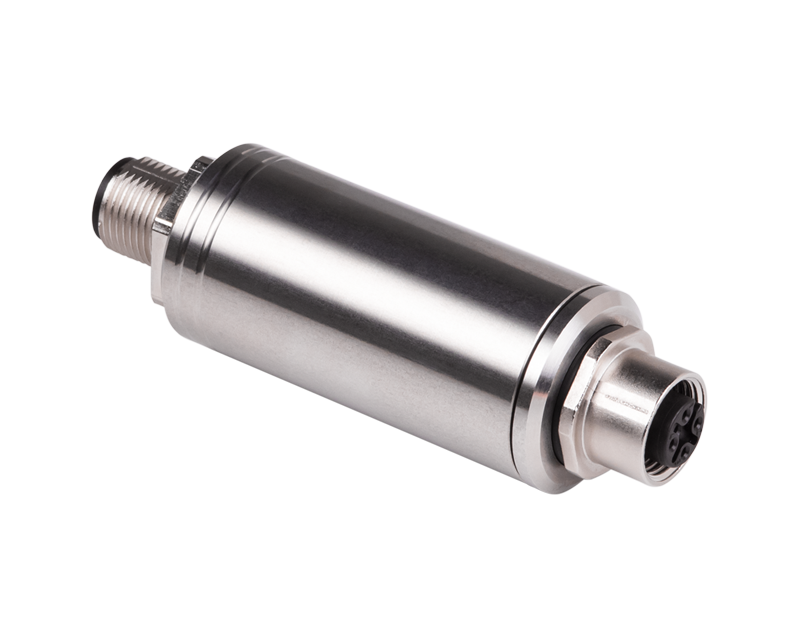
FAQ: Temperature Measurement with Resistande Temperature Detectors
What is the difference between a Pt100 and Pt1000?
Why is the Characteristic curve not simply linear?
How is linearization performed in practice?
Why is the 4-wire circuit more accurate?
What is meant by self-heating?
When is a 2-wire measurement sufficient?
Can a 2-wire Pt100 or Pt1000 be connected to a 4-wire measurement input?
Yes. The sensor is connected between + and – . In addition, the terminal P is bridged to + and terminal G to – .
Please note that even when connected to a 4-wire measurement input, the measurement remains a 2-wire measurement both functionally and metrologically, and the wire resistance is therefore not compensated.
You would like to get more information?

+49 2241 - 25 65 9 - 0
Write an email or give us a call.